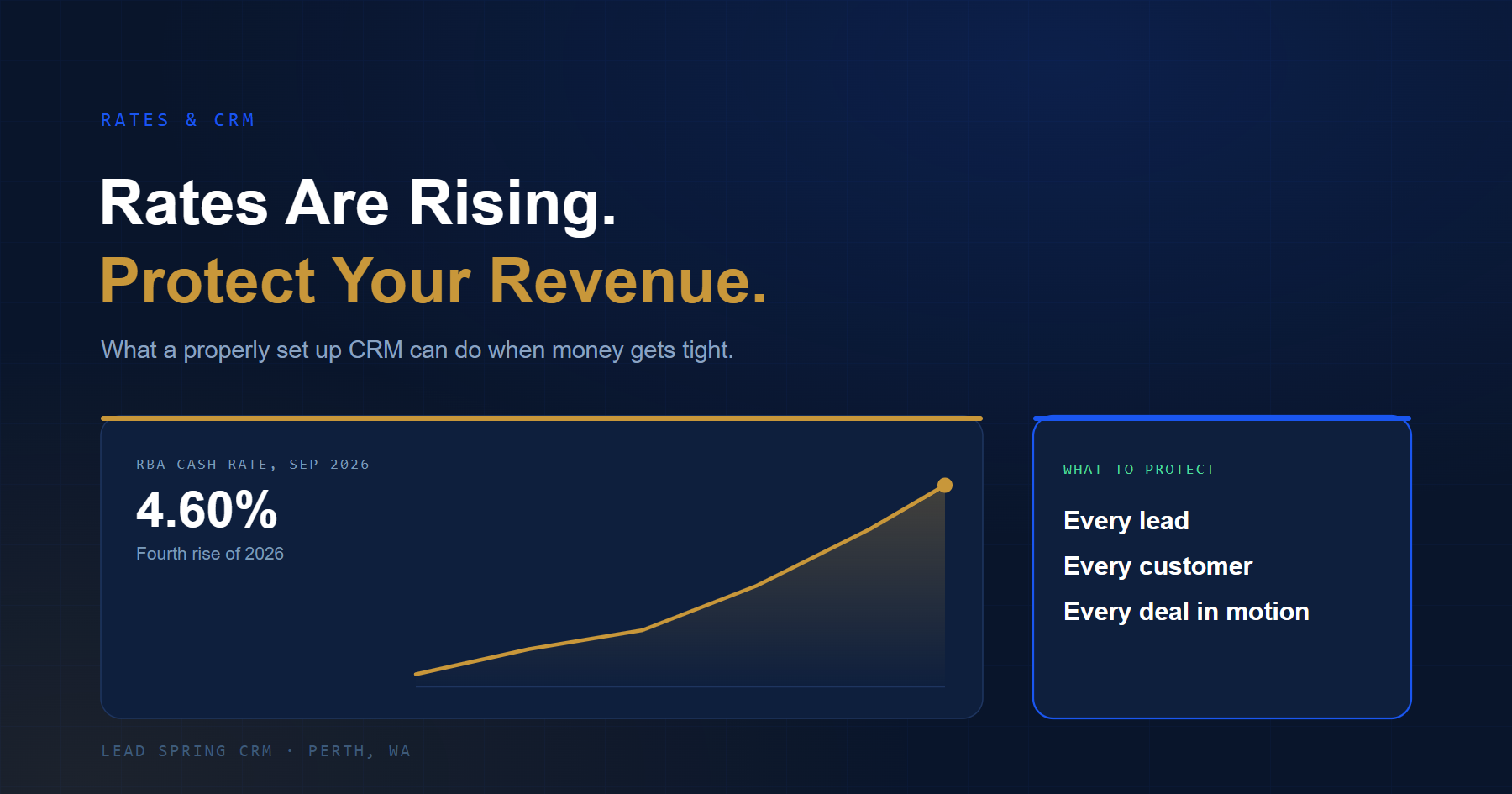
On 29 September the Reserve Bank lifted the cash rate to 4.60%. That's the fourth increase this year, 1.00 percentage point in total, and the highest the rate has been in 15 years. The RBA has said further rises remain possible.
I'll put my own view on the table, clearly labelled as a view: I think this is heading to 6%. I could be wrong. Economists are split on where it peaks, and plenty expect it to stop well short of that. But whether it lands at 5%, 5.5% or 6%, the direction is the same, and small businesses need a plan for a world where money costs more and customers spend less. This isn't financial advice, it's what I'm watching and what I'd do about it.
What Higher Rates Do to a Small Business
- Your own costs go up. If you carry a loan, an overdraft, equipment finance or a lease with a variable rate, repayments rise with every increase. That money comes straight out of cash flow.
- Your customers have less to spend. Households with mortgages feel it first. That hits anything discretionary, and it hits businesses selling to them, which is most small businesses in Perth and across WA.
- Sales take longer. When money is tight, people don't say no, they say "not right now." Quotes sit unanswered. Decisions get pushed. A sale that used to close in 2 weeks drags to 6.
- Customers pay later. When your customers are squeezed, invoices get paid slower, and you end up funding their cash flow with yours.
- Every dollar gets questioned. Owners start cutting subscriptions, software, and anything that doesn't obviously earn its keep. That includes the CRM.
What This Means for Your CRM
Here's the uncomfortable part. A CRM is often one of the first things cut in a squeeze, because it looks like a cost rather than a source of revenue. And a CRM that's half set up, that your team never really adopted, deserves to be cut. If nobody's using it, you're paying for a filing cabinet.
But cutting a CRM that's properly implemented is the wrong move, because the problems above are exactly the ones it's built to help with. The question to ask isn't "can I afford my CRM." It's "is my CRM doing enough to justify what it costs." If the honest answer is no, fix the setup before you cancel the tool. Review what you're paying for as well. Most small businesses I look at are paying for seats nobody uses or a tier higher than they need, and that's money you can reclaim this month without losing anything.
What a CRM Can Actually Help You Achieve in This Environment
Make Every Lead Count
When fewer people are enquiring, each lead is worth more. A properly set up CRM captures every enquiry, responds within minutes instead of days, and follows up automatically. If you're spending money on ads, losing a lead you've already paid for is the most expensive mistake available.
Protect the Customers You Already Have
Winning a new customer in a tight market is expensive. Keeping one is cheaper. A CRM shows you who hasn't bought in 6 months, who's gone quiet, and who's due a check-in, so repeat revenue doesn't depend on someone remembering.
Keep Slow Deals Moving
Longer sales cycles are where deals quietly die. Automated follow-up and clear next-step tasks mean a "not right now" gets revisited at the right moment instead of forgotten.
See Your Pipeline Honestly
When cash is tight, you need to know what's actually coming in, not what you hope is coming in. A CRM with a clean pipeline gives you a realistic view of the next 30, 60 and 90 days, which is what you need to plan around.
Spot Cash Flow Problems Earlier
Connect your accounting tool and you can see overdue invoices alongside the customer record. Xero's native connector syncs invoices and payments both ways, so whoever is chasing a customer sees their payment status before they pick up the phone.
Do More Without Hiring
Automation takes repetitive admin off your team's desks. That's not about cutting people, it's about getting more out of the team you have at a time when adding headcount is hard to justify.
Know Where Your Marketing Money Works
When budgets tighten, you can't afford to spend on channels that don't produce customers. Tracking which sources create actual sales, not just clicks, lets you cut the waste and keep what works.
What a CRM Can't Do
It won't create demand that isn't there, and it won't fix a business with a weak offer. A CRM makes the most of the leads and customers you have. In a tighter market, that's often exactly where the margin is.
A Short Checklist for the Next 30 Days
- Check every lead source is feeding the CRM, so nothing you've paid for gets lost.
- Set up an automatic follow-up so every enquiry is answered the same day.
- Pull a list of customers who haven't bought in 6 months and contact them.
- Review your pipeline and close out anything that's gone cold, so your forecast is honest.
- Audit what you're paying for in seats and tiers, and cut what isn't used.
None of this is complicated. It's the kind of tidy-up that tends to get skipped when business is good and pays off quickly when it isn't.
Book a Free CRM Chat and I'll look at your setup, show you where leads and revenue are leaking, and tell you what's worth keeping and what isn't.